Feeling helpless to help

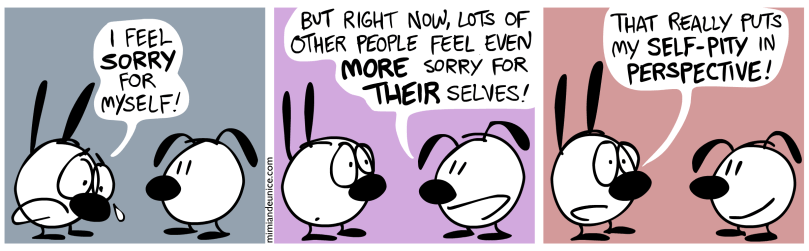
In an episode of the American TV show, The Good Doctor, a first-year surgical resident has to treat a severely burned car-crash victim. He finds himself unable to look at her injuries or speak to her normally. Feeling overwhelmed by the situation, he steps out and laments to a colleague that he doesn’t know what to do. Her reply struck a chord with me. “Quit feeling sorry for yourself and get back there. You can at least come out to escape but she is stuck within those four walls with no way out.”

With the magnitude of some problems that plague the world today, we often have to deal with feelings of frustration and helplessness. But each moment we spend feeling powerless to effect change fast enough, is one more second we are spending not aiding the people who are actually in need.

This doesn’t mean that we should bottle up those negative feelings and just put on an optimistic facade. It is human to feel that way and we should acknowledge it. But once we have vented and ranted, we should dust ourselves, get back up and see what we can do to help.

self-pity

Hope

hope

With the deluge of bad news coming in right now, from dire climate change predictions to sexual harassment scandals to anti-net-neutrality laws, it is hard to not go through the cycle of anger, frustration and helplessness ending with cynicism. Way too often, I catch my inner voice asking – Is there any point at all in believing that we can do better and striving for loftier goals? Given our species’ eagerness to destroy ourselves, do we even deserve to dream of a better life?

But at the end of each mental tirade, I pull myself out because of that magical 4-letter word – hope – because if we don’t have hope, then what else do we have left?

Blurred Lines

line

All my life, I have searched for and found inspiration in every person I interacted with and in every scenario I observed. I have always seen this as a useful trait to have. It has allowed me to find lessons I can apply to myself from the unlikeliest of places.

But recently I have come to notice that this has, over time, morphed into trying to be like every other person I meet. If I meet a friend who has just gone on a solo backpacking trip, I tell myself to try something adventurous. If I see someone out on a jog, I lecture myself to start exercising that very day.

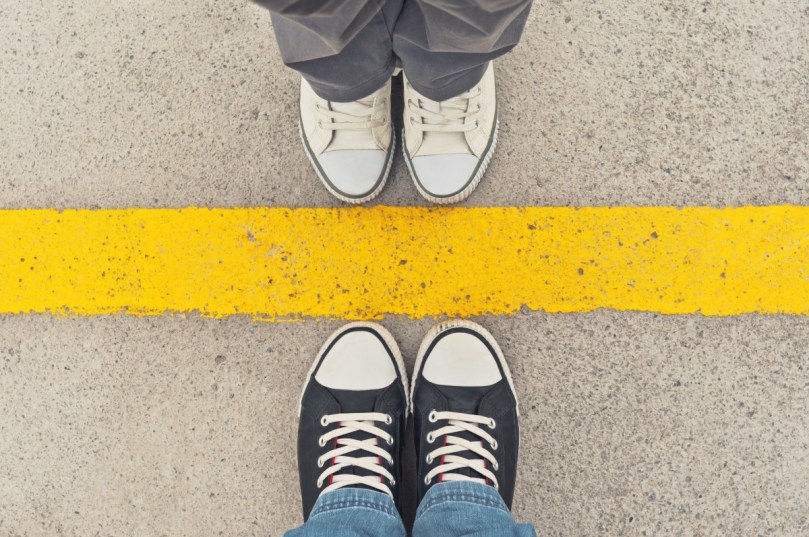
Now, most of these things are definitely good to practise or try out. But it has also made me forget to ask myself, “What do I want to do?” It is all too easy to blur the line between admiring somebody and trying to ape him/her. It may be a thick line but it can get fuzzy all the same. While learning from others’ examples and trying to improve oneself, it is important to question ourselves now-and-then on what it is that we want. There are a million things that would be good to do in life, but how many of them will bring me – a unique individual with my own set of characteristics and quirks – joy or satisfaction?

We can admire every person we come across, but we can’t live every one of their lives – only our own.

I will, I won’t, I want

challenge

Kelly McGonigal, in her powerful book, The Willpower Instinct, describes three kinds of challenges which require three types of willpower.

“I will” challenge
– What is something that you would like to stop putting off?
– Ability to say ‘yes’ when you want to say ‘no’

“I won’t” challenge
– What would you like to do less of or give up completely?
– Ability to say ‘no’ when you want to say ‘yes’

“I want” challenge
– What is the most important long-term goal you want to concentrate on?
– Ability to find your motivation when it matters, when faced with temptations and desires

Let’s pick a “I will”, “I won’t” or “I want” challenge for this month and exercise the appropriate willpower to meet it.

Autopilot

How many conscious decisions do we take on any given day? If I eliminate those about fashion and food, I am surprised by how few in number they are. And I have found that the few I do make are more likley to be about work improvements, but rarely are they about my own personal life.

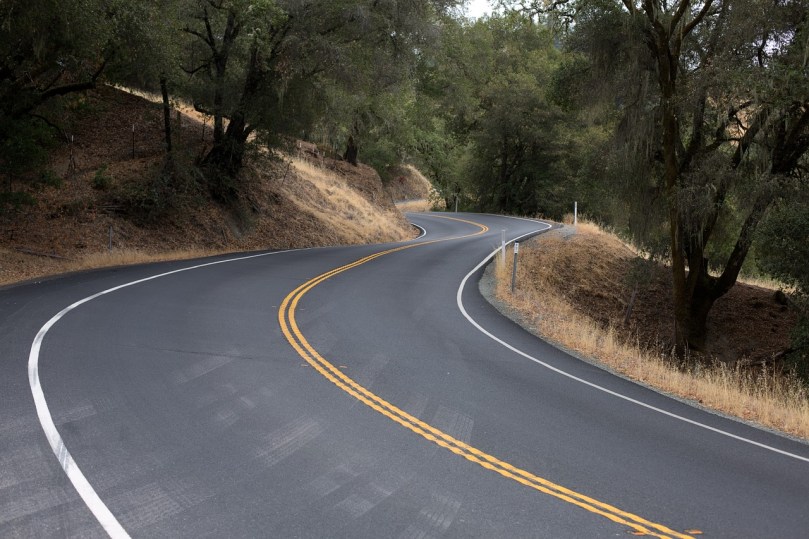
It is amazing how much time we spend daily on autopilot, doing quotidian things. But those precious few conscious decisions we take over the span of our life time are the ones that influence our life course.

The psychologist, Roy Baumeister, explains with the perfect analogy. When driving, we spend 95% of our time going straight, but it is the turns that we take which determine where we end up.

road-turn

Nike

nike-2

I recently completed Shoe Dog by Phil Knight, the founder of Nike. It is a compelling read that shows the heart and passion of the “shoe dogs”, the people who grew the company, Blue Ribbon, from an overseas distributor for Japanese shoe maker Onitsuka Tigers, to Nike, a now-household brand, that designs, develops and manufactures its own lines of shoes. From selling Tigers out of the trunk of his car to currently employing around 62,000 people for a brand valued at $29.6 billion, Phil Knight has been a trail blazer.

It is hard to condense this book that is full of heart and soul to a mere few lines, but I think these quotes from the book aptly describe the spirit of the people behind Nike.

The art of competing, I had learnt from track, was the art of forgetting. You must forget your limits. You must forget your doubts, your pain, your past.
– Phil “Buck” Knight

Somebody may beat me – but they are going to have to bleed to do it.
– Steve Prefontaine

The cowards never started and the weak died along the way – that leaves us.
– Bill Bowerman

Today, at the mall, I saw the Nike outlet across the floor from Onitsuka Tigers and one floor above Adidas and I can’t help but be amazed and awed at the incredible journey that lead them here. Nike is a reminder of what is possible if we have the audacity to dream and courage to believe.

Everyday Kindness

Random-acts-of-kindness8

Being kind, empathetic, compassionate, helpful – are these really worth it? This question has been plaguing me for a while now. More often than not, kindness is taken for granted, free help or advice is never valued, empathetic people are taken advantage of. Growing up, I believed that one good act will beget another in return. But in reality, the balance doesn’t always tally up neatly.

Anlaysing rationally, this is not hard to understand. If a stranger is helpful to us, we will appreciate it, but most of us don’t appreciate the daily kindness of our mothers. It is just easy to take for granted that which happens regularly.

So then, is trying to be good and kind and nice everyday, really worth it? Well, this is the answer I have come up with so far. If being a good person – a better version of myself – makes me respect myself more, if the possibility of brightening few moments of one person’s life somewhere in the distant future seems worthwhile, then yes, it’s all worth it. But this is a question that each individual has to answer for his/her self.

There will still be moments when we might feel undervalued, people we have to move away from, situations where we have to stand up for ourselves. But along with those instances, there will also come those rare ones where, knowingly and unknowingly, we make someone’s day better.

And this story has reinforced my belief.

My heart was warmed at Wal-Mart during lunch.

This gentleman’s items were scanned and he was given the total. He looks apologetically back at me and starts taking handfuls of change out of his pockets. He miscounts and starts to get flustered. Gives me a muttered, “I’m so sorry.” His hands and voice are shaking. This beautiful cashier takes his hands and dumps all the change on the counter and says, “This is not a problem, honey. We will do this together.” He continues to apologize to both of us as we reassure him it’s ok. They get his transaction handled and he shuffles away.

I looked at this wonderful woman and said, “Thank-you for being so patient with him.”
She shakes her head and replies, “You shouldn’t have to thank me, baby. What’s wrong with our world is we’ve forgotten how to love one another.”

I want to be more like her.

(Source: Upworthy)

I hope one day, someone looks at me and says, “I want to be more like her

Unexpected Friendships 

A friend recently shared our Facebook “friendversary” video with me. And while we were chatting, she said “Unexpected friendships are the best ones”. 

Those human connections that form from unlikely circumstances or with people we never thought we could ever even relate to – they are made all the more precious just because of those very facts. They can become some of the best relationships of our lives – because of the diversity in our individual thinking, opinions, life experiences and what not. They can even make you discover new things about yourself. 

And I think those friendships should serve to remind us to not just stick to familiar faces, but put ourselves out there and interact with those who are different from us in various ways. We never know when any of those might turn into a life-long bond. 

Sorry, but… 

I’m sorry for what happened but I didn’t… 

I apologise but you must see… 

Sorry, but your apology has already been rendered useless. Those ellipses are not for effect, the person you are apologising to is likely not listening anymore – probably busy thinking “Here come the excuses“. 

We have all been on the talking and receiving end of this kind of conversation. The instant an apology is followed by a but, the sorry becomes ineffective and everything said afterwards just sounds like an excuse. Even when you want to make the other person understand the reason for your actions, that is not the right time to say it. 

Sometimes we apologise because we want to diffuse the situation – regardless, just say sorry because that is what you wanted to say. There will be another time and place to explain your reason. The reason will anyway fall on deaf ears until your remorse comes across as sincere. 

Apologise without clauses. Don’t give yourself any leeway. Because appending a but just shows that we are not willing to take full responsibility for our actions. 

Typography 

Everyone has probably seen the Oscar gaffe by now, the first in its 88-year history. For those who don’t know what I am talking about, there was a mix-up during the declaration for Best Picture, resulting in La La Land being announced in the place of Moonlight. Aside from it being the unfortunate mistake of the person who handed out the winner card, I was also puzzled as to how the presenters didn’t realize that they were holding the card for the wrong category! This article solved that mystery. Getting the typography right – such a small thing – could have averted this mishap. 

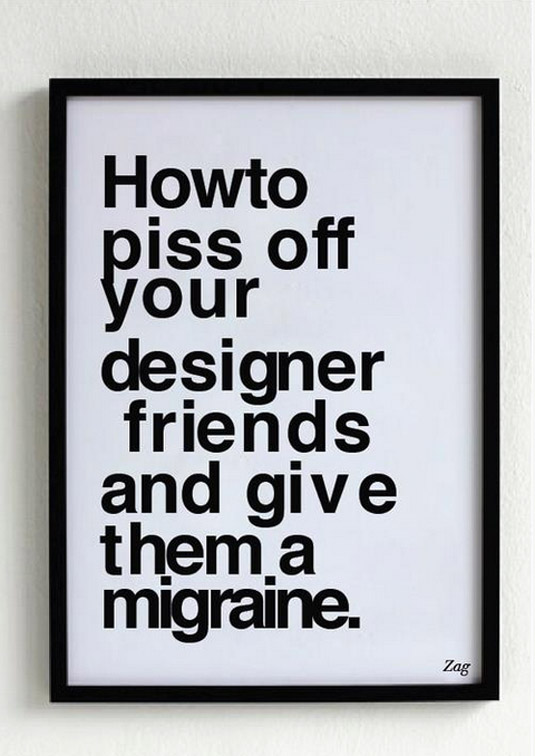
Typography is one of the many details that can seem small but makes a huge difference in presentation. The next time we are preparing something to be viewed by someone else – whether it is a resume, video or just a simple email – let’s put ourselves in the reader’s shoes, see what he/she will see and if the things of interest to him/her are displayed prominently and aestheically. Sometimes, especially if you have been staring at your own work for a long time, it helps to ask a friend to also take a look, for fresh eyes.

As the Oscar incident has shown us, attention to detail matters.