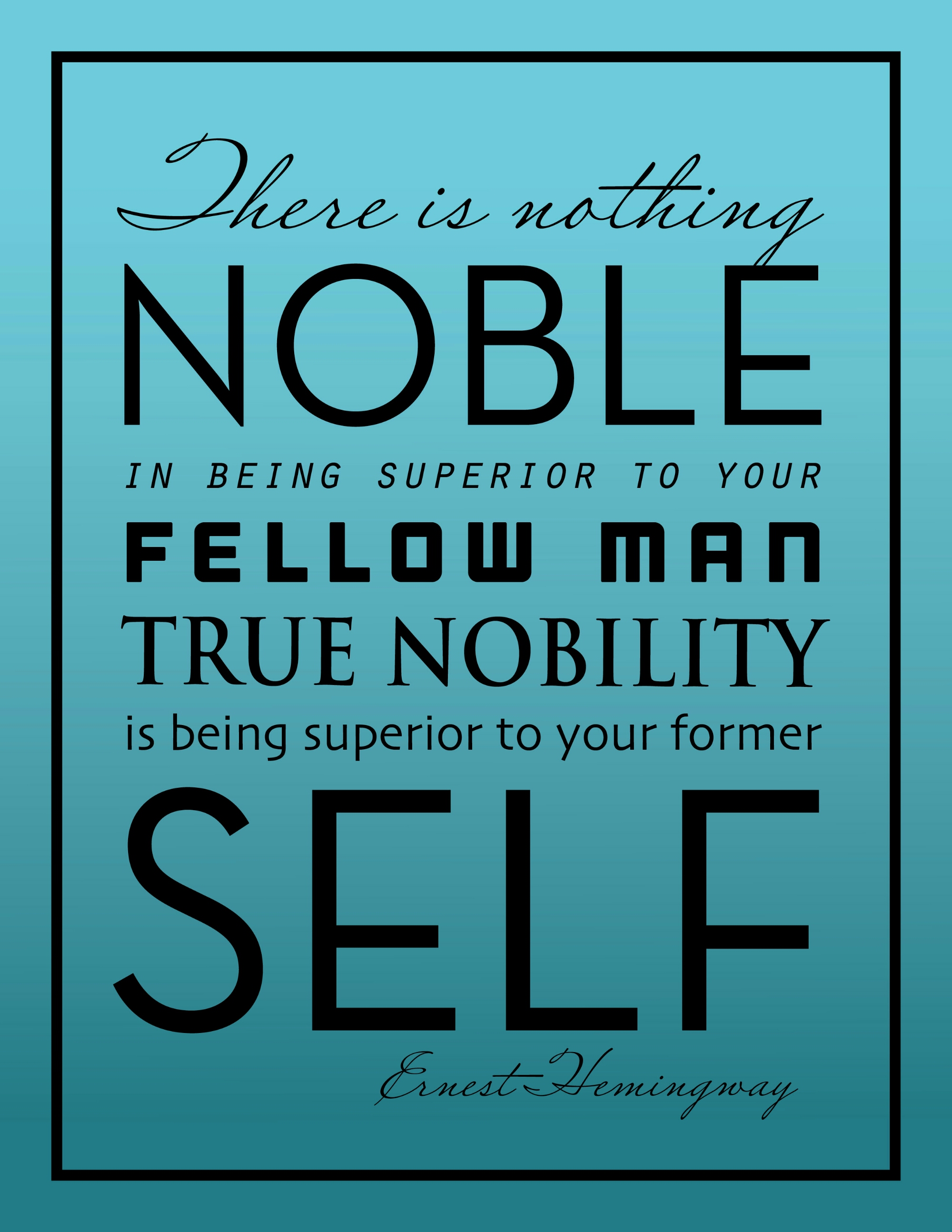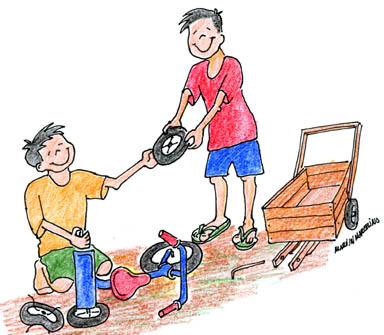
It is really easy to feel like the righteous person in the room by putting others down or finding fault with their statements (or actions) based on preconceived notions. Too often, we validate this behaviour to ourselves because it makes us feel an inch taller and gives us a heady sense of superiority, however fleeting that may be. But the next time you are convinced that your point of view is the best, pause for a minute and really listen to what the others are saying. Is there some truth in their words? Are you being empathic to their issues? Could any of your underlying assumptions be wrong? Have you ever been in such a situation yourself and if so, how did you want others to treat you then?
Author: monikapuhazh
Fortunate
If you have a roof over your head…
If you don’t have to worry about your next meal…
If you have well-wishers in your life…
If you don’t live in constant fear that today will be your last day on this earth…
If you have the choice of an education…
If you can choose your career…
If you have a job…
If.. If.. If..
If you have any of these countless privileges in life, you are fortunate.
“First-world problems” has become a cliche term now. But it is a hard truth. Sure, higher standards of living come with their own set of problems and our yardsticks for success and happiness are proportionally longer. However, a lot of us who even have the luxury of accessing the internet and reading this blog without hearing bomb shells in the distance, have the benefit of choice – and the dilemmas that come with it. But these are the good kind of problems to have.
It is hard to remember this when we are going through a hard time – whether it is just a bad day at work or the loss of a loved one. Because thinking about the guy in a wheelchair when you are walking barefoot doesn’t exactly ease the pain in your soles.
I have realised that the key thing is to remind ourselves about these privileges during the normal and half-bad days – the days when nothing spectacular or horrible happened and the days when just couple of things went wrong. You don’t need to watch a refugee camp video for reminders, just start noticing small things around you – revel in others’ happy moments, enjoy the weather – whatever defines happiness for you.
Our mind is a muscle. The more we train ourselves to think this way, the more it will become second nature. And eventually they will help you get through those truly dark times.
Of course the very first step is to truly accept and acknowledge to ourselves that we are indeed fortunate.

Everyday Heroes

Today’s Google Doodle commemorates the 175th birthday of Ida Lewis, a lighthouse keeper known by the title of “Bravest Woman In America” and the first woman to receive a Congressional gold medal for saving lives. And how did she “save lives” in the 1800s? By rescuing people from drowning around Lime Rock Lighthouse using her rowboat (her father was the lighthouse keeper, a position she took over in 1879). She is said to have done her first rescue at the age of 12.
Rob Scheer grew up in the foster care system and one of his unpleasant memories from that time was having all his belongings in a trash bag. When he and his husband, Reece, adopted their first two kids from the foster care system, he was shocked to see them carrying trash bags still, after all those years. So he started ComfortCases, a non-profit foundation that provides backpacks with necessities like toiletries, pajamas, toothpaste, books, etc. to foster kids. They donated 25,000 kits in the D.C., Maryland and Virginia foster care systems last year.
I have read countless such stories about ordinary individuals who have made a positive difference in others’ lives by their simple actions. They are everyday heroes. They show that you don’t need to be Melinda Gates or Mark Zuckerberg to impact this world. We can make a difference at whatever scale possible, regardless of who we are or what our financial status is – all that is needed is the desire, an initiative and the commitment to see it through.
Instant Answers

We live in a world where most answers are just a few clicks away. On the one hand, this is awesome! Internet and technology have made information available globally, enabling us to learn from the experiences, mistakes and insights of others, allowing us to progress together that much faster. But on the flip side, we have also become used to instant answers.
So often, especially in the software profession, I see developers wanting to know the final solution directly – they just want to get things to work. It has become rarer to find someone willing to go through the learning process of figuring out something on his/her own. And this is important because the journey to that answer can teach us like nothing else can. You can take the example of any of the greats in your field to appreciate that fact.
Now, I am not advocating spending time figuring out all our problems from scratch or reinventing the wheel – that would be inefficient. But where it is a question of fundamentals or a subject that you wish to study deeper and become an authority on, attempt to resolve the issue yourself using the resources available. Even if you find the solution online, spend the time to understand why and how it works.
My deepest insights in my current line of work have come during my days-long trial-and-error methods to understand a core concept. I still Googled for answers but when I found it, I took it apart to understand why it worked, even if it took me a couple of extra days (or weeks). My rule-of-thumb is asking myself “Can I now explain this to someone else and answer his/her questions without uncertainty?”
I didn’t happen on this observation initially. It has taken me more than two years in the professional world to recognize this and even begin to implement it. But it is crucial that we take that first step to move away from instant answers. Start with the next problem you encounter. Trust me, it will be time well spent.
Selfless
In the Friends episode, The One Where Phoebe Hates PBS, Joey tells Phoebe that there are no truly unselfish acts and Phoebe does hilarious things to prove him wrong, including “letting” a bee sting her! But jokes aside, I agree with Joey’s statement. There are no completely unselfish acts, just ones that feel relatively selfless compared to others.
Nothing that we do is completely devoid of selfishness. Any deed, even if it is sacrificing something of yours to help another, involves some measure of self-centeredness – you are doing it because it gives you joy, it fulfils you, or it agrees with your conscience. I think that the term selfless itself encapsulates this idea – you think “lesser” about yourself, but your “self” is also a benefactor in the equation.
And accepting this is important because once we do, we stop feeling entitled to gratitude, we don’t view ourselves to be superior for helping others, we feel humbled by the effect of our actions instead of others’ response to them.
Note: I reversed the roles of Phoebe and Joey when I first published this post. It has been corrected now. I apologise for the mistake.
Take a chance
Recently, I came across this video by a guy who made 366 new friends in 2016. In the video, he talks about how smart phones have created a bubble that limits natural moments of inter-personal interaction. So, he decided to put his phone down and try to meet new people. He ended up making 366 friends in 365 days.
But this post is not about making more human connections or stepping out of our digital bubbles. My key takeaway from his experience was how he put himself out there and tried to make friends despite fear of rejection. And he faced a few of those as well. But he persisted ( :P)
I think we all need to become more comfortable with being uncomfortable because it expands the potential of what we can accomplish (by) so much
Being a social introvert myself, I have felt this uncomfortable feeling too often, and most of them were even before making the attempt to talk. I have always tried to tell myself to ignore it and talk anyway (rarely succeeding). But his words made me rethink my point of view. We should not be trying to ignore our unease, but rather view it as something normal in the process of meeting new people – “get comfortable with being uncomfortable”. This shift in perception will ensure that we don’t quit something at the first hint of awkwardness.
So, let’s embrace that anxiety, tension, apprehension and take a chance anyway. It is a risk worth taking.
Forming Habits

When I started Daily Contemplations, I was fully psyched up about putting my thoughts into words and seeing concrete ideas form out of my mental chaos. The first couple of weeks went reasonably well. Then I started missing a day here and a day there, but I managed to get back to writing quickly enough. Then came a gap of a week, couple of new posts, then another week of nothing and this trend has just continued.
Whenever we start something new (that does not come under the instant gratification category), most of us find it hard to make a regular habit out of it. Research studies show that the highest point in the process of new resolutions or habits is the beginning moment – when you make the commitment. You feel hopeful, optimistic and good about yourself. Then comes the valley of “insight”- diminishing will power, vulnerability to temptations, physical or mental challenges. This is the space where a lot of us quit. For those who manage to wade through this bit and come out on the other side, the activity has become a habit – something you no longer need to expend will power for.
Now, there are two ways to go about this problem.
- Figure out the barriers – the ones which are making it difficult for us to continue the activity we committed to – and then think of simple solutions to navigate them
- Identify the bright spots – recall the times when we managed to follow the resolution and spot the things that made it easier for us
In my case, the main issues I have identified are
- I have been trying to write in the morning instead of in the night, but never get up early enough to do it. And because I already failed in my resolution to write in the morning, failing to write in the night again does not seem as big.
- I am not easily satisfied and I search around for the right words to use. And this gets stronger as I write more and more. Knowing the effort and time I need to put in becomes a deterrent.
- And then there are the usual temptations of course – TV shows, books, sleep.
As for my bright spots,
- I found that I managed to write regularly when using the WordPress mobile app which allows me to write on the go. Making a start while travelling makes the task seem easier to finish when I get back to it later.
- I work better when I am surrounded by people also working on their own things.
Today, I have decided to tackle three of the points I mentioned above.
- Since I didn’t manage to write today morning again, I took my laptop with me when I left my house in the evening for some other work. Knowing that I had brought my laptop specifically for this makes it harder to not feel bad about skipping writing, even if it is night-time now.
- I am seated in a university study area, surrounded by students, so that I am more motivated to write.
- And not having free wifi means I can’t be tempted by videos either.
This is only the first day of hacking though the “insight valley” though and it will be a long time before I come out on the other end. But I hope that identifying my issues / bright spots and putting them down in words here will help me to continue on this path. I hope to come back with another post later where I can talk about how I managed to make a lasting habit out of this.
Digital Moments – What are we missing?
Nowadays, every event is captured though video and photos. While this is very helpful for watching events that one is unable to attend, we often use this as an excuse to not attend something in person. How many times have we told ourselves, “I will just watch the video when it comes out”? I know I have, too many times to count.
I attended an inter-university cultural competition recently after a gap of 3 years. And I realised what I had been missing out on the last three years – feeling the palpable energy, excitement, frenzy, ecstasy, tears and a range of other emotions. Being in that room surrounded by cheers and booing, joy and sadness, success and disappointment, and most important of all, the heart-warming camaraderie, was an amazing experience and made even the rushed cab journey worth it.
Being physically present as an audience makes you feel like you are part of the show and that is something you don’t get while viewing digitally captured moments on a screen several miles away.
P. S. How far can advancements in VR authentically replicate that experience? It will be interesting to find out.
Anger
Regardless of the situation, the cause, the balance of right vs wrong, anger is simply a manifestation of helplessness. Period.
And the more we start to recognize and acknowledge that, the better we will get at controlling and channelling it.
Journey & Destination
For any art performance (in my case, dance), we go through months of tough practice and endless rehearsals, all for a 10- or 20-min stage presentation. Performing well on the final show day is what counts for the audience. But what we dancers remember more after the show’s wrap-up, is the practice days that lead up to those final 20 minutes, those special bonds of friendship forged, the treasure trove of memories shared. Regardless of the show’s success, it is the preceding days’ experiences that stays on in our minds, be they positive or negative.
Reflecting back on these memories has made me realise that that the path is as important as, if not more than, the target. Setting a goal is how we get started on a journey. But at the end of the ride, it is the journey that impacts us more than the destination. And it is upto us to choose and shape it the way we want.