
Lay off

Today I had to inform a team member that he was being laid off. This was the first time I had had to convey such news. As you gain experience and go up the corporate ladder, there will be more such situations. You might agree with the decision or you may not. Regardless, there are some key things that I believe are important to get right as a manager when we apprise our reportee of his / her dismissal.

  • Let them know at the earliest, as soon as the decision has been taken.
  • Inform them personally. Face to face is best. If not, atleast virtually over a 1:1 call. Never over chat or email.
  • Do not make small talk. Get to the point immediately.
  • Regardless of whether you agree or disagree with the decision, begin with empathy “I am sorry to inform you that…”. Even if the decision is due to justifiable reasons like poor performance or attitude, this news is going to have a big impact on their lives. Acknowledge that to yourself.
  • Be honest about the reason behind the decision – performance not up to expectation, not a good culture fit, budget cuts, whatever it may be.
  • Be short and concise. Don’t lengthen the conversation to make yourself feel better.
  • This conversation is about them, not you. It might be hard on you to deliver this news but they are the ones who have to deal with a sudden major upheaval in their lives.
  • After conveying the decision, give them space to react. Do not give platitudes or unnecessary justification.
  • After they have said their piece, acknowledge their efforts and contributions to the team. Again keep it short.
  • If it was a forced business decision and not due to the employee’s performance issues, let them know that you will help them with references or recommendations if they need it.
  • Finally, if this was part of a larger lay off in the company, set up a call with the remaining team members. Be candid about the company’s situation and the reasons for the hard decisions. Reassure them of the company’s vision and detail the strategy to get through these tough times.

Firing an employee is hard, no matter the reasons. The way we treat someone when he exits tells more about our core values as an organisation than all the support and recognition given to him while he was with the company. It also sends a message to the remaining employees still with the firm.

If we don’t do it right and with dignity, it is an indication that we have started selling pieces of our soul in a bid to get ahead in the rat race.

Language and family

My mother tongue, Tamil, has many beautiful words with no equivalents in English. One category of such words is the names of family relations.

Sharing a light hearted moment with your ‘athai’. Unapologetically clamouring for attention from your ‘thatha’ and ‘paati’. Pouring your heartfelt teenage troubles to your ‘chithi’. Teasing and playing games with your ‘mama’. These are all unique familial moments that are enhanced by the simple act of calling those relations by their specific names instead of the uniform, impersonal ‘aunt’ and ‘uncle’.

Regardless of the complications and troubles that family brings to our lives, the simple pleasure of calling someone ‘chithi’ or ‘thatha’ invokes an instant feeling of intimacy and belonging. In an increasingly lonely world, this is a reminder to self to be grateful for the gift of this language and to not take it or these relations for granted.

Journey of a relationship

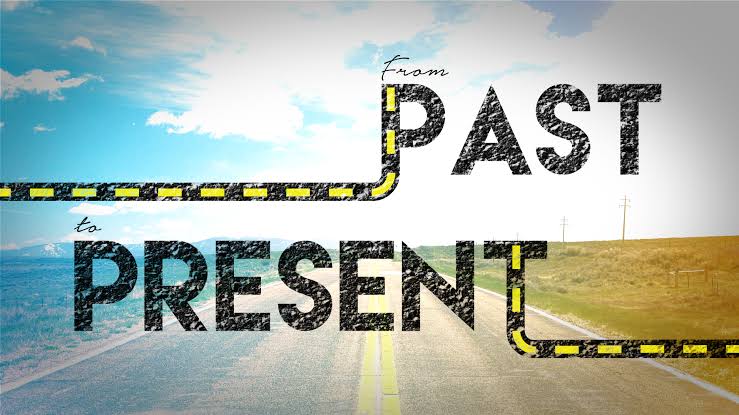
In our closest relationships in life, we often make the mistake of holding onto the past version of our loved ones. We reminisce about those old memories and make every attempt to recapture that feeling in the present without recognizing them for what they are – just remembrances of the past.

Instead we should travel with each other as companions on this life journey as we both continually evolve into newer versions of ourselves. See the other person for who he/she is now. Stay in touch with each other – in the present, not just the past.

Going high

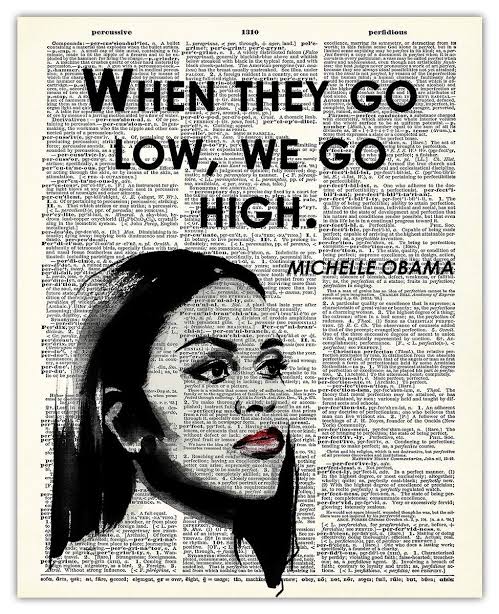
When they go low, we go high

These words of Michelle Obama captured the world’s imagination and heart at a time when most of us felt hopeless and cynical.

But what does going high really mean?

It means taking a reaction and maturing it into a response. Thinking of the long-term collective good over short-term individual satisfaction. It’s the pause one takes between stimulus and reply, the only part of life that we truly control.

Meaningful engagement

The most meaningful gifts we can give anyone are our time, attention and love. Sending e-cards, shipping Amazon packages and WhatsApp video calls are poor replacements for handmade gifts and in-person visits. While it’s completely fine to use technology to bridge gap with loved ones, let’s not forget that they are only temporary respites until we meet again.

As I increase engagement and mindfulness in my life, one lesson is repeatedly reinforced. We have limited time with the people we love. We shouldn’t take it for granted.

Growing old

When I reached 25 and the societal pressures of adulthood came into being, I used to wish that I could rewind the clock and go back to my teens or early 20s. However, over time and through multiple life experiences, I matured and grew. Now as I am entering my 30s, I am not looking back with wistfulness anymore. Rather I look forward to new adventures and experiences in the upcoming years.

As per Morrie Schwartz, age is not just decay but also growth. If you wish to go back to your younger self, it reflects an unsatisfied and unfulfilled life. On the contrary, if you have found purpose in life, you will want to move forward, see more, do more.

Time and age do not stop for anyone. Instead of battling growing old, let’s try to find what gives our life meaning and beauty in the present. So we can look at the path ahead with excitement instead of gazing at the days gone past with nostalgia.

Because why would you want to go back to a less enlightened version of yourself?

Who do you want to meet?

If you could meet one person, living or dead, who would it be?

My answer to this question has varied depending on who I was in awe of or had influenced me recently. I have thought of everyone from my favourite grandfather to Barack Obama. But the answer never felt satisfactory, a niggling feeling that the interaction might feel empty .

Today I was re-reading one of my favorite books and finally the answer came to me in a flash – Morrie Schwartz. He was an enigmatic, loveable sociology professor whose final days were recorded in the best selling book, “Tuesdays with Morrie”.

How was it that I believed, in my bones, that meeting this man who I have only read stories of, would be an important meaningful interaction in my life? Why was Morrie different from all my other heroes?

The answer lay, not in his accomplishments or my image of him, but what he gave to those who interacted with him. Love. Time. Undivided attention.

Most importantly, how he made them feel about themselves. That was the difference.

That one person

If you have ever made a controversial life choice you know how it feels when the whole world seems to be against you. During such times, that one person who reaches out and expresses faith in your decision makes all the difference.

During all other times in life, we may have multiple people supporting us in different ways. But the cumulative magnitude of all that support diminishes in comparison to that one person who shows that he/she understands our point of view and reinforces that we are not alone.

When no one believes in us, it slowly erodes our self esteem and confidence. That in turn affects the subsequent decisions we make. It can become a vicious cycle thereon. At that time, a lone voice saying “I believe in you” has the power to pull us out of the destructive spiral and carry us to solid ground again. Giving us the strength to move forward.

I was very fortunate to have been the recipient of such understanding and comfort during a dark period in my life. Its importance was reiterated to me recently when I saw how it fortified someone else during their hard times.

Let us be more understanding and compassionate of others’ life choices. We never know when we might be the one voice they needed to hear.

What is your story?

In his book, Sapiens, the historian Yuval Noah Harari, mentions that each of our lives is themed around a story. It is what influences our life choices. It’s always there, even if it is subconscious.

When I asked this question to myself, the answer popped out immediately. Learning and growth. Looking back on all my past experiences, ever since childhood, whether it was migrating to a new country at the age of 17 or picking up a new language, the motivation to learn and grow has been the catalyst.

There is a security and comfort in knowing the foundation of your own life story. It is like an anchor that gives you tacit confidence in the decisions you make, regardless of the final outcome.

Ever since acknowledging my life story, I have found strength in knowing that even if I fell, I took those steps to grow and the fall could never be a failure.

Death

Death is one of the biggest fears of mankind. Throughout human history and extending to the present times, we have gone to extreme lengths to prolong it. I have seen first hand how that fear manifests more sharply as humans near old age and become cognizant of their own mortality.

In the midst of all this, the following quote by Jane Goodall in “The Book of Hope” was an eye opener.

When you die, either there is something or there is nothing. If there is something, what greater adventure can there be than finding out what it is?

What a hopeful way to approach old age – viewing it not as the end of something but the beginning of our greatest journey yet.